


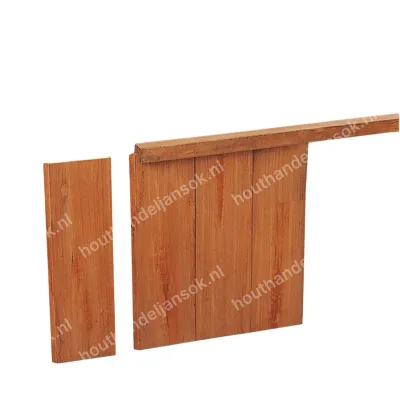

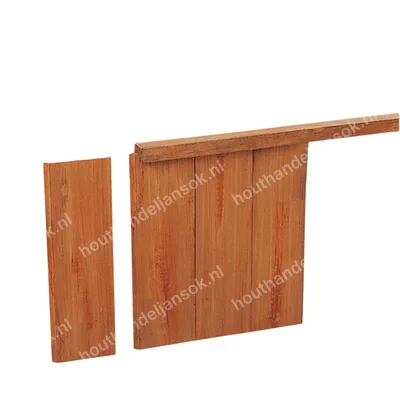
Buying sheeting timber begins with the load on your bank. You also weigh how long the wood remains in water. For lasting bank work, Azobe hardwood is the standard choice. Douglas can handle a light garden edge that remains fairly dry. Prolock Sigma is the plastic option when you prefer modest upkeep.
Hardwood sheeting in Azobe
Sheeting planks and sheet pile planks in Azobe remain sound in water. The sections have a herkomst mark and handle lasting water contact. Correctly installed, it commonly lasts 25 to 40 years or more in a working bank. This is the proper choice for ditches, canals and heavier banks.
Light timber sheeting for garden edges
A lighter screen can handle a garden pond or a small ditch. Douglas or treated pine will cost you less than hardwood. That timber remains weaker when the soil stays wet all year. Use it for modest jobs or for a short outdoor period. Do not use it for real water projects or heavier bank loads.
Plastic sheeting as a third option
Want sheet piling with almost no upkeep after install? Prolock Sigma plastic sheet pile lasts 50 plus years in the bank. It is simpler to install and needs no extra treatment. Review both options in Prolock versus hardwood.
Where can you order sheeting timber?
Order hardwood sheeting and bank planks in our sheeting range. We help with thickness, length and the proper rails for your bank. For larger projects you can request a quote.
How to choose bank protection timber
Start with three questions. How high is the bank you need to hold back? How wet does the soil stay throughout the year? And how long should the wall last? A low edge along a garden pond asks for something very different from a ditch bank with fluctuating water levels or a canal side with a path behind it.
For a working bank in permanent water contact, Azobe hardwood is the standard. For a low garden edge that stays fairly dry, Douglas or treated pine can be enough, as long as you accept a shorter lifespan. If you want a long life with almost no upkeep, compare hardwood with Prolock Sigma plastic sheet piling.
Posts, planks and fixings
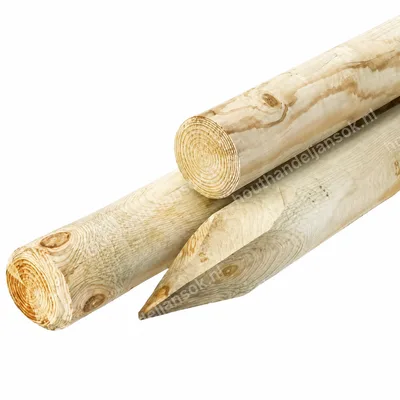
Bank protection is more than planks alone. The posts carry the load, so choose them at least as durable as the planks. Use posts long enough to go deep into firm soil, and place them close together where the bank is high or the soil is soft. Fix the planks with stainless or galvanised fixings, because ordinary steel corrodes quickly near water. Finish the top with a capping board or rail for a neat edge and extra stiffness.
Permits and preparation
Along many ditches and canals the water board sets rules for bank protection, such as the position of the wall and the materials you may use. Ask your water board before you start whether a permit or notification is needed. Also check for cables and pipes before you dig or drive posts.
Bank protection timber: summary
Choose Azobe for lasting water contact and heavier banks. Choose Douglas or treated pine only for light garden edges. Choose Prolock if you want little or no upkeep. Need help with thickness, length or the right posts? Contact us and we will help you choose.
Frequently asked questions
Is treated wood good as a sheet pile wall?
No, treated pine is made for fencing, not for water projects. Select Azobe hardwood or Prolock plastic for a wet bank.
What thickness of sheet plank?
Use 30 to 50 mm for sheet piling on a working bank. Lighter planks are enough for garden ponds and modest edges. We offer custom notes so the wall fits the load.
Do you have plastic sheet piling?
Yes, we stock Prolock Sigma, around 5000 m² ready to go. See our Prolock guide for sizes and install notes.