


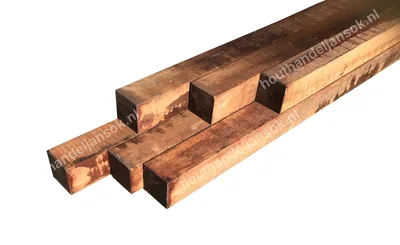
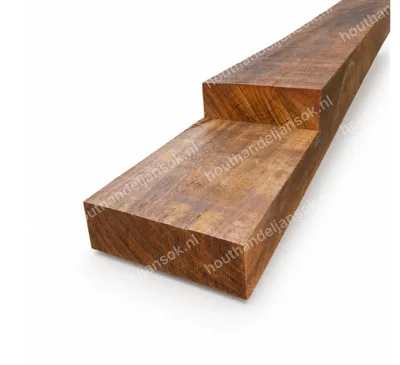
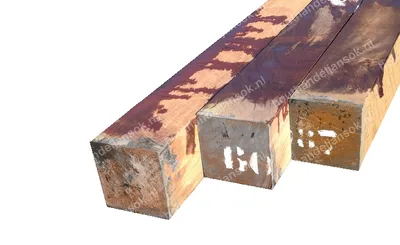
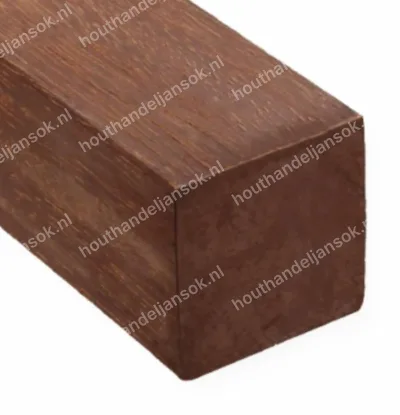
What is Tali wood? Tali is a tropical hardwood whose heartwood is rated durability class 1 (very durable) under EN 350. Untreated, it can be expected to last 25 years or more, even in contact with the ground or fresh water. At Houthandel Jan Sok in Meppel we supply it for decking, posts and beams, and other outdoor work where the wood has to cope with soil and water for years without needing treatment.
This guide explains what Tali is, how durable it is, where it works best, its pros and cons, and how to look after it. Houthandel Jan Sok (KvK 04062841) has been trading since 2000 and is rated 4,8 stars from more than 141 reviews.
What Tali is
Tali is a dense, hard tropical hardwood, in the same family of outdoor timbers as Okan and Azobe. Softwoods such as Douglas fir and larch need treatment, or have to sit on concrete pads, before they can handle ground contact. Tali does not. You can set it straight into the ground or use it in constant contact with water. The heartwood resists rot, fungi and insects on its own, a trait it shares with the other tropical hardwoods in our range.
Durability class and service life
On the EN 350 scale, Tali heartwood is rated class 1, the highest class: very durable. Left untreated, you can expect a service life of 25 years or more, including in ground contact or fresh water. That makes Tali suitable for permanent ground contact (use class 4 under EN 335). Timber in class 3 or lower is not suitable for that without treatment.
Exact strength figures, such as density, bending strength or hardness, vary a little between batches and origins, so we do not quote one fixed number. What matters in practice is that Tali keeps doing its job outdoors and in the ground without treatment, just like Okan and Azobe. If you need an exact specification for a structure, ask us what is currently in stock.
What Tali is used for
In the garden, Tali is mainly used in three places.
Decking — terraces, garden paths and pool surrounds that are exposed to rain all year.
Posts and beams — load-bearing parts that stand in or on the ground.
General outdoor work — fence parts, cladding and screens that should last a long time with little care.
Choosing between Tali and another hardwood for a deck? Read our comparison of Okan vs Tali for decking, or the wider decking materials comparison.
Pros and cons
Pros
Very durable by nature (class 1), so no treatment is needed. Suitable for permanent ground contact (use class 4). Low maintenance: the wood does not need a yearly coat to do its job. Lasts 25 years or more untreated in outdoor structures.
Cons
Heavier and harder than softwood, so it takes more effort and good tools to work. There is less published technical data than for Okan or Azobe, so exact values have to be requested. Left without oil outdoors, it turns grey. That only changes the look, not the strength.
Care and maintenance
Untreated Tali turns silver-grey in sun and rain. The change is only on the surface and does not affect the strength of the structure. If you want to keep the original colour, oil the wood from time to time. If you like the grey look, you do not need to do anything. A yearly clean with water and a soft brush is enough to remove algae and dirt. With Tali, treatment is a choice, not a must.
Frequently asked questions
What kind of wood is Tali?
Tali is a tropical hardwood whose heartwood is durability class 1 under EN 350. It can go straight into the ground or fresh water without any treatment.
How long does Tali last outdoors?
Untreated Tali heartwood can be expected to last 25 years or more outdoors, including in ground contact or constant contact with fresh water.
Is Tali suitable for decking?
Yes. Tali is used for terraces, garden paths and pool decks. Compare it with Okan in our decking materials comparison.
Does Tali need treatment?
No. Tali resists rot, fungi and insects on its own. Oil is only needed if you want to keep the colour.
See the full hardwood range at Houthandel Jan Sok, with Tali in stock.