


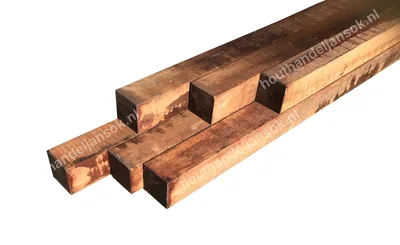
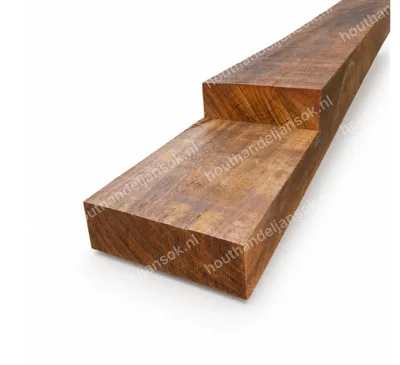
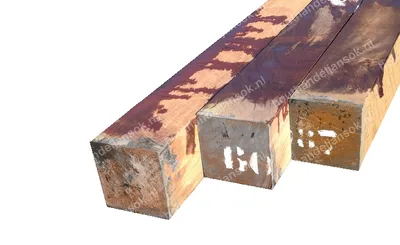
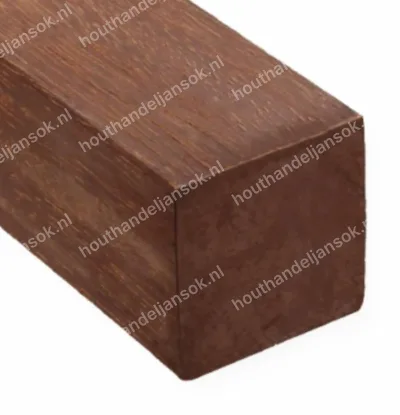
Will the wood stay above ground? And is the load not too heavy? Then you do not need hardwood and Douglas fir or impregnated pine is good enough. You only need hardwood if the wood is in the ground or in water. Or if there is a lot of weight on it. Think of a retaining wall along the water, or a terrace where many people walk.
At Houthandel Jan Sok in Meppel, we hear this question almost every day. We give honest advice. You get the wood that suits your job. Not the most expensive one.
When is softwood enough?
Will the wood stay dry and above ground? Then softwood is often the best choice. Think of:
- Boards for a fence and screens.
- A canopy or veranda on concrete feet.
- Wood on the façade, with an air gap behind it.
- A garden house or shed on a solid foundation.
When should you choose Douglas fir?
Douglas fir is strong, beautiful, and not expensive. It is well suited to outdoor projects. The wood must be able to dry out again, though. Think of a canopy, veranda, carport, fence, or garden house.
Why Douglas fir?
- Good price. It is much cheaper than hardwood or oak. Yet it is better and harder than spruce.
- Warm and beautiful. The wood is reddish brown, with grain patterns and knots. That immediately adds character to the garden.
- Lasts a long time. Douglas fir is full of resin. That is why it lasts around 10 to 15 years outdoors, even if you do not treat it.
- Good for the environment. It is softwood from Europe. It grows quickly. That makes it better for the environment than hardwood.
- Grey or stained. If you leave it untreated, it will become a beautiful silver grey over time. Do you want to keep the warm colour? Then treat it with stain or oil.
When is Douglas fir not the best choice?
- In the ground or in still water. Is a post going into wet soil? Or does water remain standing? Then Douglas fir is not suitable. Choose hardwood instead.
- If you never want to do maintenance. Do you want to avoid work on the wood for 20 years or more? Then hardwood is better. But it is more expensive.
When should you choose impregnated pine?
This is the cheapest garden wood that resists moisture and fungus well. It is suitable if you want to spend little. And if the wood gets a lot of rain and wind.
1. The cheapest choice for outdoors
Untreated pine does not last long outdoors. That is why a treatment is added. This treatment protects against rot, fungus, and insects. This way, you get wood that lasts 10 to 15 years for little money. It is much cheaper than Douglas fir or hardwood.
2. Handles moisture better than untreated wood
The treatment penetrates deep into the wood. That is why it handles rain and soil better than untreated Douglas fir. You mainly use it for:
- A fence and boards for the fence.
- Ready-made garden screens.
- Battens and wood that you do not see.
- Simple planters for the vegetable garden or borders.
3. Little maintenance
New pine with this treatment is often slightly green or light brown. That is due to the treatment. You do not need to paint or stain it right away. The sun removes the green colour over time. Then the wood turns a beautiful grey.
When do you need hardwood?
Hardwood is the right choice if:
- The wood is constantly in the ground or in water. Think of posts, a retaining wall along the water, or a jetty.
- There is a lot of weight on it. Think of a terrace or deck where many people walk.
- Replacing the wood later would be expensive. More expensive than the higher price now. For example, if it is difficult to reach. Or if replacing it involves a lot of work.
Which hardwood is suitable?
Choose hardwood if the wood touches the ground or water. Or if it needs to last as long as possible: 25 years or more. Hardwood is the strongest. It lasts the longest, even in the toughest outdoor conditions.
You really need hardwood here:
1. In the ground or in water (durability class 1 or 2)
Douglas fir and pine rot fairly quickly in the ground. Hardwood is full of oils and substances that resist fungus. You definitely need it for:
- Fence posts that go into the ground. The boards may be Douglas fir or pine.
- Retaining walls along the water.
- Beams or posts on which the rest rests.
2. Terraces and decks with heavy foot traffic
Hardwood is dense and heavy. It barely wears. It also splinters much less than softwood. That is why you choose hardwood for:
- Luxury terraces and jetties.
- Decks around a swimming pool or hot tub. The wood gets wet there all the time.
3. Clean work that must not warp
Hardwood shrinks and expands much less than softwood. Does something need to stay perfectly straight for a long time? Must the beams not twist? Then choose hardwood. Think of a luxury gate, a heavy pergola, or façade cladding in Ipé or Padouk.
Which wood can go into the ground?
This is where things often go wrong. Untreated Douglas fir, larch, and spruce should not be placed permanently in the ground. Where the wood goes into the ground, it stays wet. That gives fungus free rein.
You can do three things:
- Place the wood on a concrete footing. Then it does not stand in the ground. In that case, Douglas fir is good enough.
- Choose wood treated to use class 4. That is made for use in the ground.
- Choose hardwood in durability class 1 for posts that do go into the ground or water.
You can read more about this in [ground contact and durability classes].
Two types of classes: what is the difference?
There are two types of classes. One says how well the wood naturally resists fungus. That is the durability class (EN 350). Class 1 lasts a very long time. Class 5 lasts a short time.
The other says where you may use the wood. That is the use class (EN 335). Class 3 is above ground. Class 4 is in the ground.
A class does not say how long the wood will really last. That also depends on how it is built. Can air reach it? And how well do you maintain it?
Which wood for which job?
Job | Wood |
|---|---|
Boards, screen | Douglas fir or treated pine |
Canopy on feet | Douglas fir |
Post in the ground | Hardwood or pine in use class 4 |
Retaining wall along water, jetty | Hardwood (durability class 1), such as azobé |
Deck, heavy foot traffic | Hardwood, such as azobé |
Wood you paint | Treated pine |
Sometimes you do not need to buy anything
Is the post still firmly in place? And do only one board or screen need replacing? Then new hardwood is not the first step. We prefer to look first at what you already have. Feel free to bring photos. Or send them, including the measurements.
Advice and sawing in Meppel
At our yard at Celsius 10 in Meppel, all the wood is side by side. Douglas fir, pine, and hardwood. This way, you can see and feel the difference yourself. We saw to size. We calculate free of charge how much you need. And we deliver throughout the Netherlands, Belgium and the border region of Germany.
Open: Monday to Friday from 8 a.m. to 5 p.m. Saturday from 9 a.m. to 3 p.m.
Call 0522 851 551. Or request a quote. You are not committed to anything.