


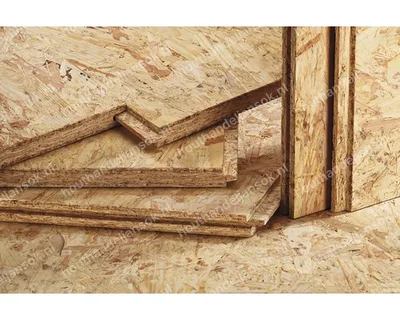
Available from stock in Meppel.
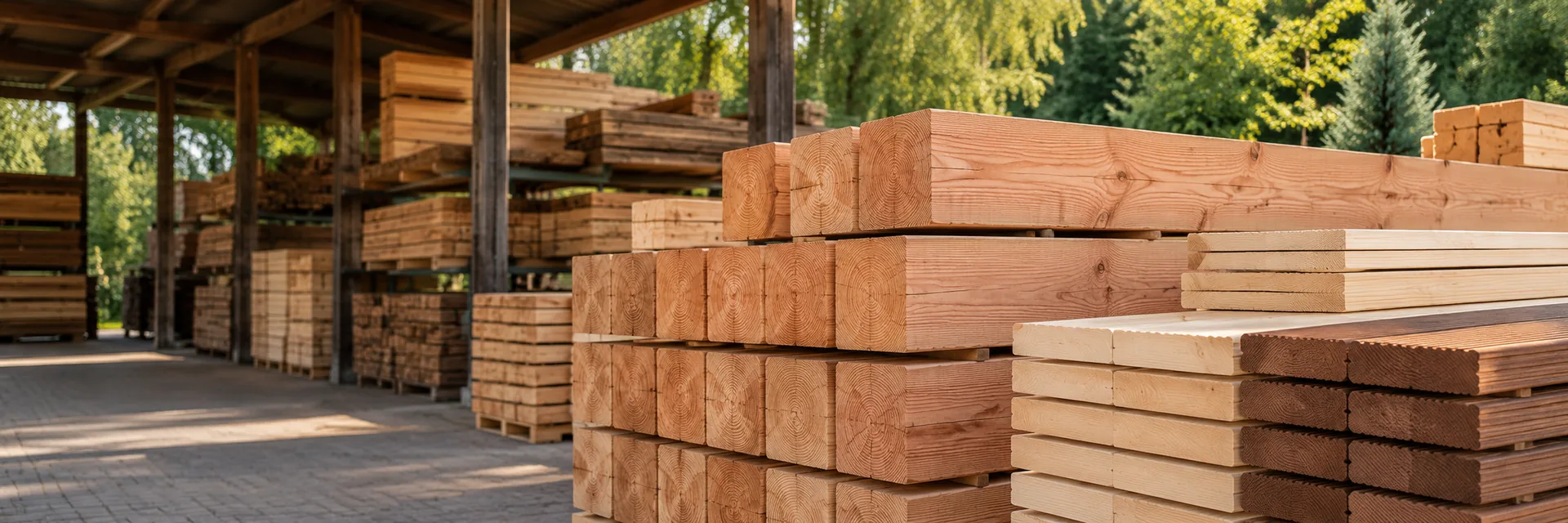
Buy OSB board - 9 and 18 mm from stock in Meppel
Quality guarantee
Carefully selected timber from reliable suppliers
Available now
Large warehouse in Meppel, delivery across the Netherlands
Sharp prices
Personal prices and business rates on request
Personal advice
Book an appointment or call us directly
Short answer: We supply OSB in two versions: 9 mm at 1.22 × 2.44 m and 18 mm at 0.61 × 2.44 m - the latter is a half sheet. No OSB board is waterproof; even the moisture-resistant class OSB/3 is intended for construction moisture, not for permanent exposure.
OSB board (Oriented Strand Board) consists of large wood strands pressed crosswise in layers. This makes the board strong in both directions, and therefore suitable for floors, walls, roof decking and formwork. Where it is on show, it remains a coarse board - if you want a smooth surface, choose underlayment or plywood.
Which OSB board thicknesses do we stock?
Two. We would rather be clear about that than have you face a surprise when you come to collect:
- OSB 9 mm - 1.22 × 2.44 m, 2.98 m² per sheet. For sheathing, wall panels and roof decking on short spans.
- OSB 18 mm - 0.61 × 2.44 m, 1.49 m² per sheet. Note: this is a half sheet, not a full-size sheet. For floors and structural work.
Do you need 12, 15 or 22 mm, or 18 mm in full size? We do not stock that here. Get in touch - and we will check whether we can order it for you through our supplier.
Is OSB water-resistant?
Moisture-resistant is possible, waterproof never. That distinction determines whether your floor holds up. The EN 300 standard divides OSB into four classes, two of which you come across in practice:
- OSB/2 - structural, but only in dry rooms.
- OSB/3 - structural and bonded to be moisture-resistant. The standard class in Dutch construction.
Moisture-resistant means the board survives construction moisture and a rain shower during the build phase. It does not mean you can leave the board outside unprotected. As soon as the strands absorb water, the board swells, and that swelling does not go away. Sawn edges are the weakest point, because the core is exposed there - so seal them. The class of your board is stamped on the board itself; ask us about the class of the current batch if you want to be sure before you order.
Which brand of OSB is reliable?
We do not sell sheet materials by brand name, and that is a deliberate choice: sheets come directly from the factory and the brand on the stamp changes from batch to batch. What does not change is what you need to look out for.
- The EN 300 class - OSB/3 as soon as moisture can get to it. This says more about the board than any brand name.
- The thickness relative to your span - a board that is too thin on too wide a centre-to-centre spacing will flex, no matter who made it.
- Origin - for demonstrably responsible forest management.
No class designation stated anywhere? Then ask about it before you order. For floors and roof decking it really makes a difference.
OSB or underlayment - which do you choose?
The price difference works out differently from what most people expect. In 9 mm, underlayment is actually slightly cheaper per m² at our yard, while it is the smoother board:
- OSB 9 mm - €19.10 per sheet, €6.42 per m².
- Underlayment 9 mm - €17.80 per sheet, €5.98 per m².
- OSB 18 mm - €17.40 per half sheet, €11.69 per m².
- Underlayment 18 mm - €35.70 per full sheet, €11.99 per m².
Prices incl. VAT, price level July 2026; the current price is always shown on the product page. Choose OSB if the board has to work structurally and will not be visible. Choose underlayment for a flat subfloor or visible work. More background in our guide is OSB water-resistant and the building site guide.
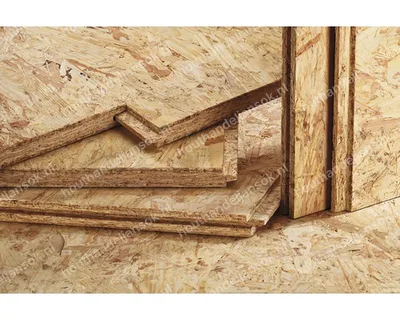
Available from stock in Meppel.
Frequently asked questions
Where can I find reliable suppliers of OSB boards in the Netherlands?
Houthandel Jan Sok in Meppel supplies OSB 9 mm at 1.22 × 2.44 m and OSB 18 mm as a half sheet of 0.61 × 2.44 m. Ordering, collection and delivery across the Netherlands are all possible.
Is OSB water-resistant?
OSB can be moisture-resistant, but it is never waterproof. Only class OSB/3 according to EN 300 is bonded to be moisture-resistant and tolerates construction moisture and temporary rain during the build phase. Permanently outdoors or unprotected on a roof, it goes wrong: the strands absorb water and the board swells irreparably. Sawn edges are the weakest point, so seal them.
Which OSB board thicknesses do you supply?
Two: 9 mm at 1.22 × 2.44 m and 18 mm at 0.61 × 2.44 m. The 18 mm is a half sheet, not a full-size sheet. Thicknesses such as 12, 15 and 22 mm are not in stock here - get in touch and we will check whether we can order them for you.
What thickness of OSB do I need for a floor?
For a floor or subfloor, use 18 mm. 9 mm is too thin to span joist spacings of 40 cm or more without flexing; use that thickness for sheathing and wall panels. Unsure about your joist spacing? Send us the measurements - and we will help you work it out.
Which brand of OSB is reliable?
We supply sheet materials directly from the factory and not by brand name, because the brand changes from batch to batch. Instead, look at the EN 300 class (OSB/3 as soon as moisture can get to it), the thickness relative to your centre-to-centre spacing, and a wood species and available product information. That says more about the quality than the brand name.
What is the difference between OSB and underlayment?
OSB is coarser and works structurally in two directions; underlayment is smoother and therefore nicer as a subfloor or visible panel. In 9 mm, underlayment is actually slightly cheaper per m² than OSB at our yard. Choose OSB for structural work out of sight and underlayment for a flat subfloor.
What do I use OSB boards for?
Floors, walls, roof decking, formwork and temporary structures. OSB is strong but coarse, so for visible interior work you usually choose plywood or underlayment. On building sites, OSB is widely used as a work floor and for boarding up.