


Available from stock in Meppel.
Buy underlayment - 9 and 18 mm, 122×244 cm
Quality guarantee
Carefully selected timber from reliable suppliers
Available now
Large warehouse in Meppel, delivery across the Netherlands
Sharp prices
Personal prices and business rates on request
Personal advice
Book an appointment or call us directly
Short answer: We supply underlayment in 9 mm (€17.80) and 18 mm (€35.70), both in full size 1.22 × 2.44 m. For a subfloor, use 18 mm. Under laminate or vinyl you do not need to varnish anything; if the board stays visible, varnish seals better than stain.
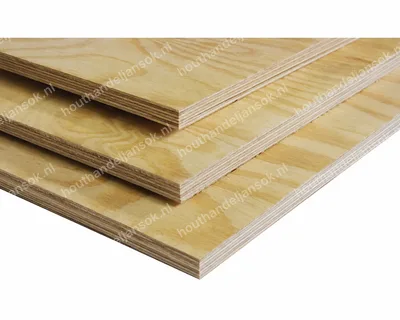
Underlayment is a wood-based board with a considerably smoother surface than OSB. That is why it is widely used as a subfloor under laminate, vinyl and carpet, and as a wall or ceiling panel where the board stays visible. Structurally, OSB is stronger; in terms of finish, underlayment wins.
Which underlayment thicknesses do we stock?
- Underlayment 9 mm - 1.22 × 2.44 m, €17.80 per sheet (€5.98 per m²). For wall and ceiling cladding.
- Underlayment 18 mm - 1.22 × 2.44 m, €35.70 per sheet (€11.99 per m²). The thickness for subfloors and work floors.
Prices incl. VAT, price level July 2026. Other thicknesses, for example 12 or 15 mm, are not in stock here - ask us whether we can order them for you. Cutting sheets to size is available in our shop in Meppel, and the first 5 cuts are free. Delivered sheets come in standard sizes; for large series or non-standard sizes, request a quote.
Which brands of underlayment do you supply?
None. That sounds blunt, but it is more honest than naming a brand that changes from batch to batch. Our sheet materials come directly from the factory, and with underlayment the specification determines the quality - not the label:
- Thickness - 18 mm for load-bearing subfloors, 9 mm only for cladding.
- Flatness and thickness tolerance - this is exactly why you choose underlayment over OSB. Check on delivery that the sheets are not warped.
- Origin - for demonstrably responsible forest management.
Anyone who recommends a specific brand of underlayment without asking about your joist spacing or moisture situation is advising on the wrong variable.
Should I varnish or stain underlayment?
That depends entirely on where the board is going, and in the most common case the answer is: neither.
- As a subfloor under laminate, vinyl or carpet - do not treat it. The board is enclosed and needs to be able to release moisture. A coat of varnish traps construction moisture under your floor covering.
- Visible as a wall or ceiling - varnish it. Varnish forms a film that genuinely seals the board against moisture and dirt.
- Only need colour - stain it. Stain soaks into the wood and gives colour and some UV protection, but does not seal the surface. Stain on its own is therefore not moisture protection.
If you want both, stain first and then varnish over it. The other way round does not work: stain does not penetrate a coat of varnish.
How do I protect underlayment against moisture?
Underlayment is an interior board. No varnish or stain turns it into an exterior board - for outdoors, choose concrete plywood or fibre cement. Indoors, these are the points that make the difference in practice:
- Treat all six sides. The underside and cut edges are almost always skipped, and that is exactly where the board soaks up moisture. On a sawn edge, the core is exposed.
- Never lay the board on a damp base. On concrete, a vapour-retarding membrane belongs under the board.
- Let the sheets acclimatise first. Two days in the room where they will be laid prevents them from still moving after installation.
- Leave expansion gaps - approx. 10 mm along walls and 2 mm between the sheets. Without room to move, the floor will lift.
- Provide ventilation under the floor. A crawl space without airflow lets the board slowly fill up with moisture.
A more detailed step-by-step plan in our guide treating underlayment against moisture.
Available from stock in Meppel.
Frequently asked questions
Should I varnish or stain underlayment?
If the board is laid as a subfloor under laminate, vinyl or carpet, do not treat it: it needs to be able to release moisture, and a coat of varnish actually traps construction moisture. If the board stays visible as a wall or ceiling, varnish it, because varnish forms a film that seals. Stain only gives colour and some UV protection and does not seal the surface. If you want both, stain first and then varnish over it.
How do I protect underlayment against moisture?
Treat all six sides, including the underside and the sawn edges - that is where the board soaks up moisture, because the core is exposed. Never lay the board on a damp base, and use a vapour-retarding membrane on concrete. Let the sheets acclimatise for two days, leave an expansion gap of approx. 10 mm along walls and provide ventilation under the floor. Underlayment remains an interior board: for outdoors, use concrete plywood or fibre cement.
Which underlayment thicknesses do you supply and what does it cost?
Two thicknesses, both in full size 1.22 × 2.44 m: 9 mm for €17.80 per sheet (€5.98 per m²) and 18 mm for €35.70 per sheet (€11.99 per m²). Prices incl. VAT, price level July 2026. We do not keep thicknesses such as 12 or 15 mm in stock; get in touch if you need them.
Which brands of 18 mm underlayment boards do you supply?
We supply underlayment directly from the factory and not by brand name, because the brand changes from batch to batch. With underlayment, the specification determines the quality: 18 mm for load-bearing subfloors, flatness and thickness tolerance as the reason to choose it over OSB, plus a wood species and available product information. Our 18 mm is in stock in Meppel in full size 1.22 × 2.44 m.
Is 18mm underlayment suitable as a subfloor?
Yes, 18 mm is the standard thickness for subfloors. Make sure you have a flat base, a vapour-retarding membrane on concrete and an expansion gap of approx. 10 mm along walls. On joists at 40 cm centres or more, 9 mm is too thin and the floor will flex.
What is the difference between underlayment and OSB?
Underlayment has a much smoother surface and is therefore nicer as a subfloor or visible panel. OSB is coarser but structurally stronger in two directions. In 9 mm, underlayment is actually slightly cheaper per m² than OSB at our yard, while you get the smoother board.
Can I get underlayment cut to size?
Yes, in our shop in Meppel. The first 5 cuts are free; extra cuts are charged. Delivered or online orders come in standard sheet sizes.