


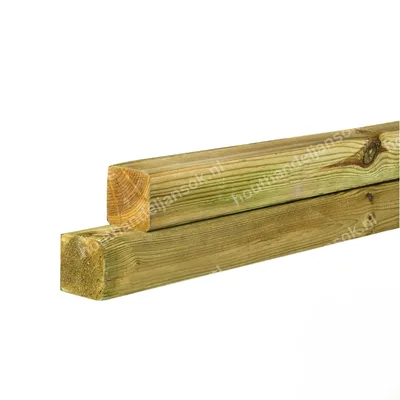

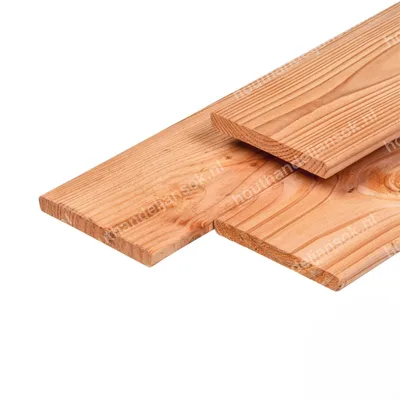
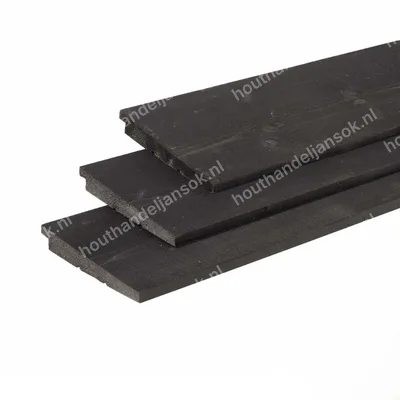
Short answer: A good timber merchant range covers both building and garden. That means Douglas fir, pine, hardwood, beams, sheet material, bank protection and screws. But wood alone is not enough, because cutting to size, reliable delivery and honest advice belong in the range too. Below you will find what each group is for, plus a short checklist to compare suppliers.
What belongs in a timber merchant range?
A DIY store has a little of everything, while a timber merchant goes considerably deeper, with more species, more dimensions and longer lengths. A full range splits into six groups:
- Garden timber for fences, decks and canopies: see garden timber.
- Hardwood for ground contact, water and heavy loads: see hardwood.
- Building timber such as beams, battens and timber boards.
- Sheet material such as OSB, plywood and insulation.
- Bank protection in wood or plastic, such as Prolock.
- Fixings such as screws, brackets and post bases.
Looking for a supplier with a similar range? See our page on a comparable timber merchant range.
Garden timber: which wood suits your plan?
The choice comes down to one question. Will the wood go in the ground or in water? If yes, pick hardwood. If not, Douglas fir or treated pine is usually perfectly adequate, which saves you a lot of money.
Douglas fir
Douglas fir is a softwood grown in Europe. It is straight, strong and attractive, and it belongs to durability class 3. Above ground it typically lasts 10 to 15 years, and it works well for a canopy, exterior cladding or a fence. Read more in What is Douglas fir?
Pressure treated pine
Pine is the cheapest choice. It is impregnated under pressure with a preservative that prevents rot, which turns it green or brown. It is good for fence panels, posts and a shed. Not sure which to pick? Read pine vs Douglas fir.
Hardwood
Hardwoods such as Azobé, Okan and Tali are the toughest. They belong to durability class 1. In soil and water they last 25 years or more. Use them for posts, decks and banks. They cost more, but you rarely need to replace them.
Wood | Class | Lifespan | In the ground? |
|---|---|---|---|
Pine (treated) | 4, better once treated | 10 to 15 years | Fair |
Douglas fir | 3 | 10 to 15 years, above ground | No, use a post base |
Hardwood | 1 | 25 years or more | Yes |
Building timber and sheet material
Are you building a shed, roof or wall? Then you need more than garden timber. Check for these parts:
- Beams and battens: spruce or Douglas fir, often graded C24 when they carry a load.
- Roof battens and counter battens: for the roof, in standard sizes.
- Plywood and shuttering ply: for floors, walls and formwork. See plywood or shuttering ply.
- OSB: fine with damp, but not waterproof. Read is OSB waterproof?
- Insulation and membranes: PIR boards in 20, 30 or 40 mm, plus a vapour control layer.
- Roofing: EPDM for a flat roof, or corrugated sheets for an open shed.
Buy these parts from one supplier. That way the dimensions match, and everything arrives in a single delivery.
Bank protection for ponds and ditches
Do you live by the water? Then bank protection belongs in the range. There are two main types. Azobé is a hardwood and lasts 25 to 40 years. Prolock is made of durable plastic and lasts 50 years or more without maintenance. Plastic often costs more per metre initially, but over the years it can work out cheaper. Read more in plastic vs timber bank protection.
Screws and fixings belong in the range
Good wood with poor screws soon goes wrong. Outdoors, always use stainless steel or a good coating. With hardwood, drill a pilot hole first, otherwise the board may split. So ask if the merchant also stocks screws, brackets and post bases. More tips are in screws for hardwood.
What to check on timber quality
A reliable merchant stores timber dry, ventilated and protected from direct rain. Ask about grading, because structural timber marked C24 is intended for load bearing constructions. Small knots, minor cracks and a little resin are completely normal in softwood and are not a defect. For tropical hardwood, also look for FSC or PEFC certification, so the origin remains traceable.
Example: what do you buy for a fence?
Say you build a fence 10 m long and 1.80 m high. Then you need something from almost every group:
- Posts: hardwood in the ground, or Douglas fir on a concrete base.
- Boards or panels: Douglas fir or treated pine.
- Rails: to fix the boards to.
- Screws: stainless steel, two per board on each rail.
- A capping rail: on top, so rain runs off fast.
Get everything from one merchant and every component fits together, so you only make one trip.
Service is part of the range
Stock without professional advice is only half the job. A good merchant also helps you with:
- Cutting to size. You get boards that fit right away.
- Delivery. Long beams do not fit in a car.
- Expert advice. A pro can see fast if your plan works.
- No minimum order. Even one board should be fine.
Want to know what to look for? Read our tips on choosing a timber merchant.
Checklist: how to compare a timber merchant range
Do not just compare the price per board; instead, evaluate suppliers using these seven points:
- Which wood species are in stock?
- Which sizes are there, also over 4 m long?
- Is the durability class stated?
- Do they stock sheet, screws and fixings for the whole job?
- Do they cut to size, and what does it cost?
- How and when do they deliver, and at what price?
- Can you call or drop by for advice?
Does a merchant score well on five points or more? Then you are usually in good hands.
Mistakes we often see
- Douglas fir in the ground. It decays quickly right at ground level, so always mount it on a post base.
- Wood that is too thin. A thin board warps easily, so choose one size thicker.
- Buying bits from all over. Dimensions and fixings then rarely match properly.
- No margin. Add 5 to 10 percent for offcuts and errors.
How Jan Sok does it
Jan Sok has a webshop and a yard in Meppel, the Netherlands. We help both home DIYers and trade pros. There is no minimum order, and you will find garden timber, hardwood, building timber, sheet, bank protection and screws. We cut to size and can deliver. We do not sell ready made garden furniture sets, because we focus on good wood and advice for your own project. Start in the shop or ask for a quote.
Frequently asked questions
What belongs in a timber merchant range?
Garden timber, hardwood, building timber, sheet, bank protection and screws. Cutting to size, delivery and advice belong too.
How do I compare two timber merchants?
Look at species, sizes, class, stock and service. Use the seven point checklist above.
When do I pick hardwood and when Douglas fir?
Pick hardwood if the wood goes in the ground or in water. Above ground, Douglas fir or treated pine is often enough.
Do you have everything for my garden project?
For most fence, deck and canopy jobs, yes. Not sure? Send your sizes via the quote form. We will tell you honestly what fits.