


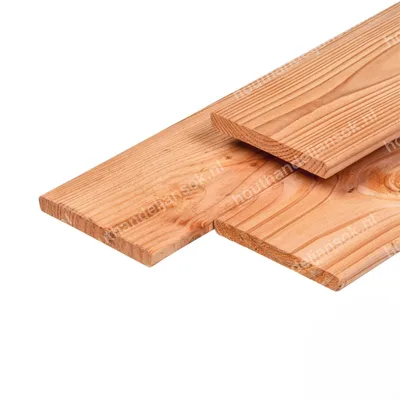
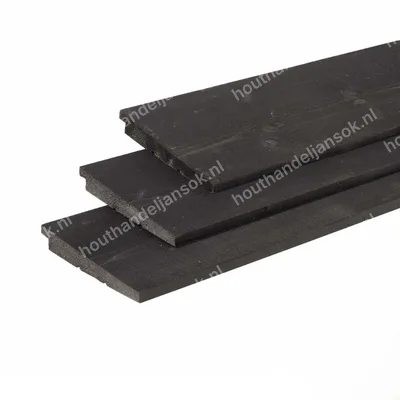
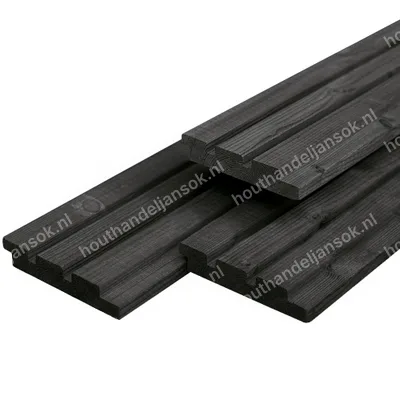
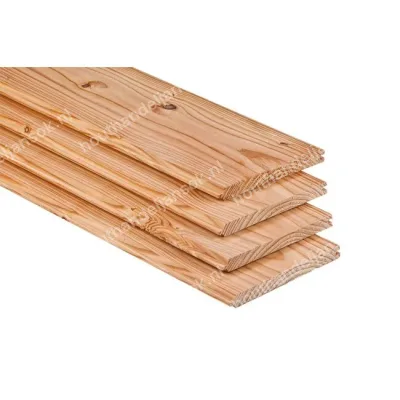
What is Douglas timber? Douglas is a warm, red-brown softwood from the Douglas fir (Pseudotsuga menziesii). Its heartwood is rated durability class 3 under EN 350: moderately durable. It is strong, fairly light and easy to work, and it is often 30 to 50 percent cheaper than hardwood. That makes it one of the most popular timbers in the Netherlands for canopies, verandas, fences, cladding and decking. The one thing it should not do is sit in the ground.
Houthandel Jan Sok in Meppel has been trading since 2000 (KvK 04062841) and is rated 4,8 stars from more than 141 reviews. We keep Douglas in stock in common sizes: beams from 45 × 75 to 63 × 175 mm in lengths of 2,50 to 6,00 m, posts up to 5 m, boards 150 to 250 mm wide and decking boards of 28 × 145 and 28 × 195 mm.
What Douglas timber is
The Douglas fir is originally a North American tree that is now widely grown in Europe. The heartwood has a warm red-brown colour, which sets it apart from paler spruce or larch. It has some natural resistance to fungi and insects, but it does not cope with permanently wet soil. For structures in direct ground contact (use class 4), Douglas is not the right choice. For above-ground and sheltered work, it is an excellent one.
Durability and service life
Class 3 puts Douglas between larch and spruce: it lasts longer than spruce and is close to larch. In practice, untreated Douglas generally lasts 10 to 15 years outdoors above ground. In direct ground contact, or where it stays wet all the time, that drops to about 5 to 10 years or less.
Because the heartwood is only moderately decay-resistant, good detailing matters more than the surface finish. Keep posts off the ground on concrete pads or post bases, let water run off, make sure the wood can dry after rain, and protect the end grain. A coat of stain or oil keeps the colour, but it will not turn Douglas into ground-contact timber.
What Douglas is used for
Douglas is a versatile structural timber. Typical uses are canopies and verandas, fences, cladding (including Swedish rabat and overlapping boards), decking and terrace boards, and beams, posts and profiles for garden buildings. Unsure whether to choose Douglas or impregnated pine? Read Douglas vs impregnated pine, or see our guide to buying Douglas timber.
Pros and cons
Pros: strong and reliable in a structure, fairly light and easy to work, a warm red-brown colour, often 30 to 50 percent cheaper than hardwood, and in stock in Meppel.
Cons: not suitable for permanent ground contact (class 3), a shorter life in wet spots, and it turns grey when left untreated.
For work in permanent contact with soil or water, we recommend hardwood or impregnated pine in use class 4. See hardwood vs Douglas.
Maintenance
Douglas needs little care, but not none. A yearly clean with a mild cleaner removes algae and dirt and slows the greying. To keep the warm colour, oil or stain every one to two years. For the strength of the structure, this is not strictly needed: grey is only a change in appearance. A full plan is in Douglas maintenance.
Frequently asked questions
Can Douglas timber go in the ground?
No. Douglas is class 3 and in the ground it often lasts only 5 to 10 years or less. Set posts on concrete pads or post bases. For structures in the ground, choose hardwood such as Okan, Azobe or Tali, or impregnated pine in use class 4.
What is the durability class of Douglas?
Douglas heartwood is class 3 under EN 350, which means moderately durable. It has some resistance to fungi and insects but does not tolerate permanently wet soil.
How long does Douglas timber last?
Untreated, it generally lasts 10 to 15 years above ground, but only about 5 to 10 years, or less, in ground contact or where it stays wet. Good detailing matters more than the surface finish.
Does Douglas timber need maintenance?
A yearly clean is enough for the structure. To keep the warm colour, oil or stain every one to two years. Untreated grey wood is only a change in appearance.
How much cheaper is Douglas than hardwood?
Douglas is often 30 to 50 percent cheaper than comparable hardwood, which makes it a smart choice for structures without ground contact. Current prices are in our Douglas range and in Douglas timber prices.
Is Douglas a hardwood?
No. Douglas is a softwood in durability class 3. To see when you really need hardwood, read when you don't need hardwood.
What colour is Douglas timber?
Fresh Douglas has warm red-brown heartwood and paler, yellowish sapwood. Untreated outdoors it turns silver-grey within one to three seasons. A Tenco stain keeps the red-brown colour or gives it another tint. See also the Douglas colour code.
Related: what is pine timber? · pine vs Douglas · outdoor pine and spruce