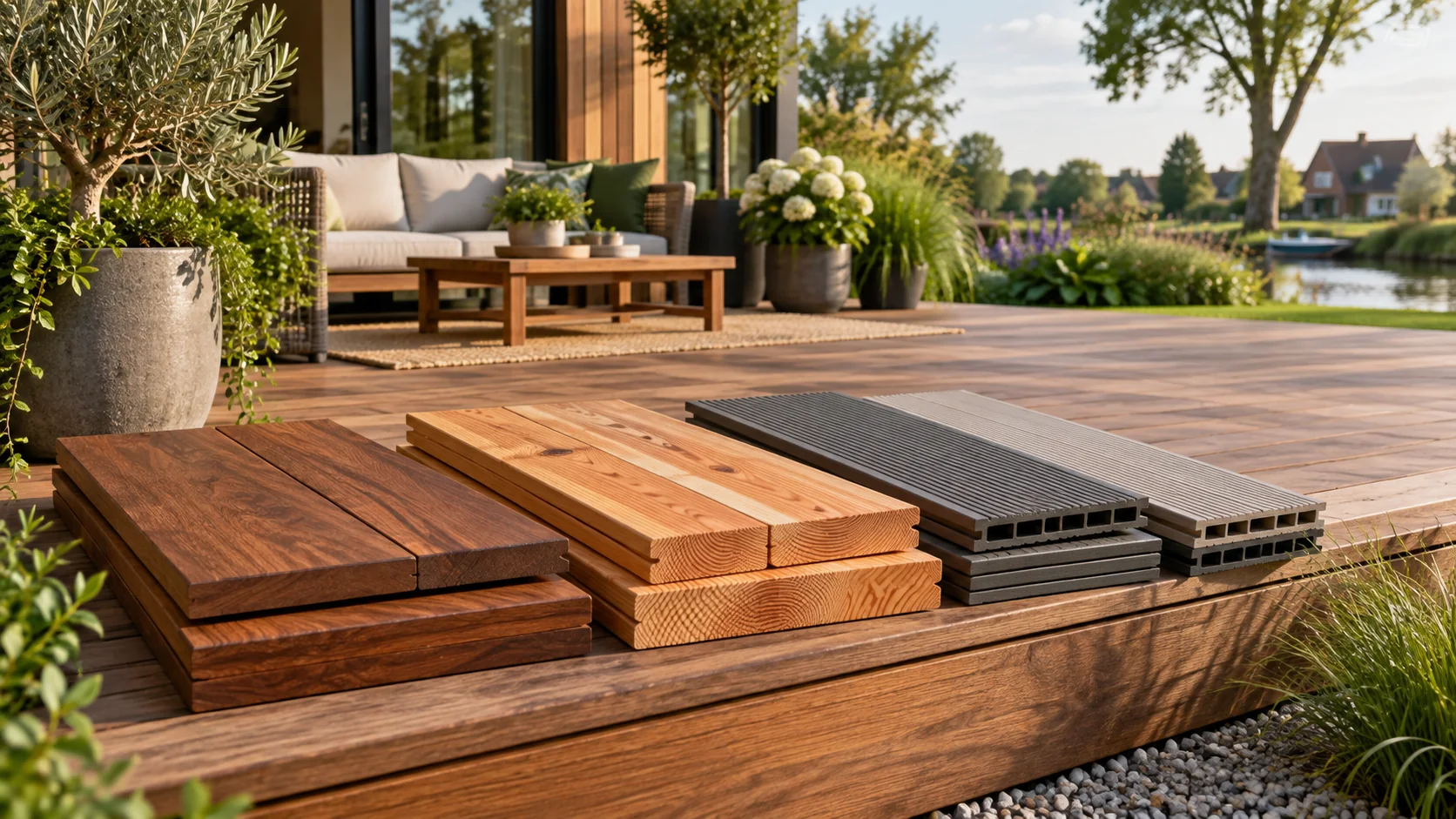


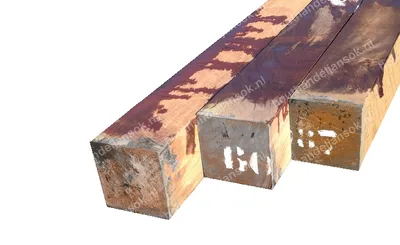
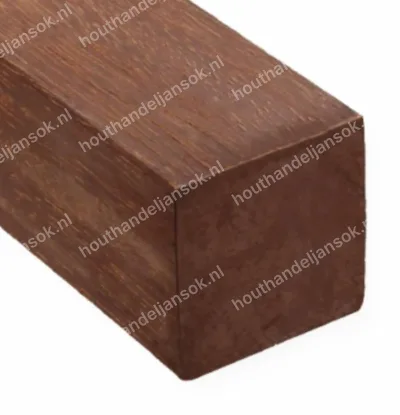
Hardwood or Douglas? Both species see frequent use on decks, fences and outdoor frames. The choice depends on budget, lifespan and upkeep. Compare our hardwood and Douglas ranges.
How long it lasts
Tropical hardwood such as azobé, okan or tali lasts 25 years or more untreated, even in ground contact. Douglas sits in class 3: untreated, it lasts around 10 to 15 years above ground, but often only 5 to 10 years in the ground.
Price per metre
Douglas is often 30 to 50 percent cheaper per metre. Hardwood pays back in life span on heavy use.
Look of the timber
Douglas starts red-brown and later greys in the weather. Hardwood colour varies by kind. Both can take oil.
The work on site
Douglas is softer and easier to cut. Hardwood needs good tools and you should pre-drill.
When to pick which timber
Pick Douglas for fences and home decks. Pick hardwood for pool decks and trade use. Request a quote for advice on your job.
Ground contact makes the difference
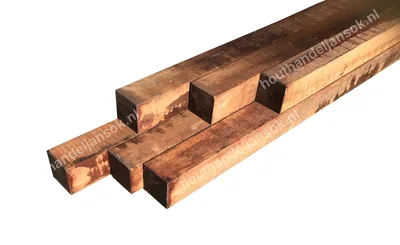
The biggest difference between Douglas and hardwood shows where wood touches soil or water. Douglas sits in durability class 3. Above ground, with good air flow, it lasts around 10 to 15 years untreated. In wet soil that can drop to 5 to 10 years or less, so a Douglas post needs a post base or a concrete foot. Tropical hardwood in class 1 or 1-2 can stand in the ground or in water for many years. For posts, bank protection and parts that stay wet, hardwood is the safer choice.
Weight, tools and fixings
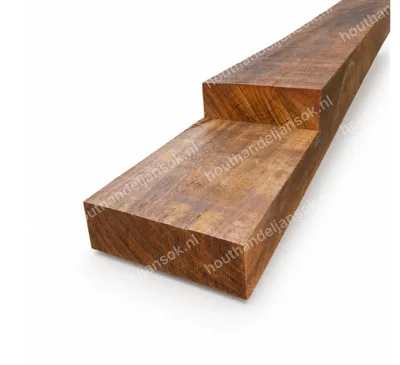
Douglas is lighter, so long boards and beams are easier to carry and fit on your own. It cuts with a normal saw. Hardwood is heavy and dense. Pre-drill every screw hole, use stainless screws made for hardwood, and expect to replace saw blades and drill bits more often. Plan a little more time for a hardwood deck than for the same deck in Douglas.
Total cost over the years
Douglas costs less to buy. Hardwood costs more at the start, but on a deck with heavy use, or on a part that stays damp, it can work out cheaper over its full life because you replace it less often. Compare the cost per year of use, not only the price per metre. For a fence or a canopy that stays dry, Douglas usually wins. For a busy deck near water, hardwood often does.
Douglas vs hardwood: quick summary
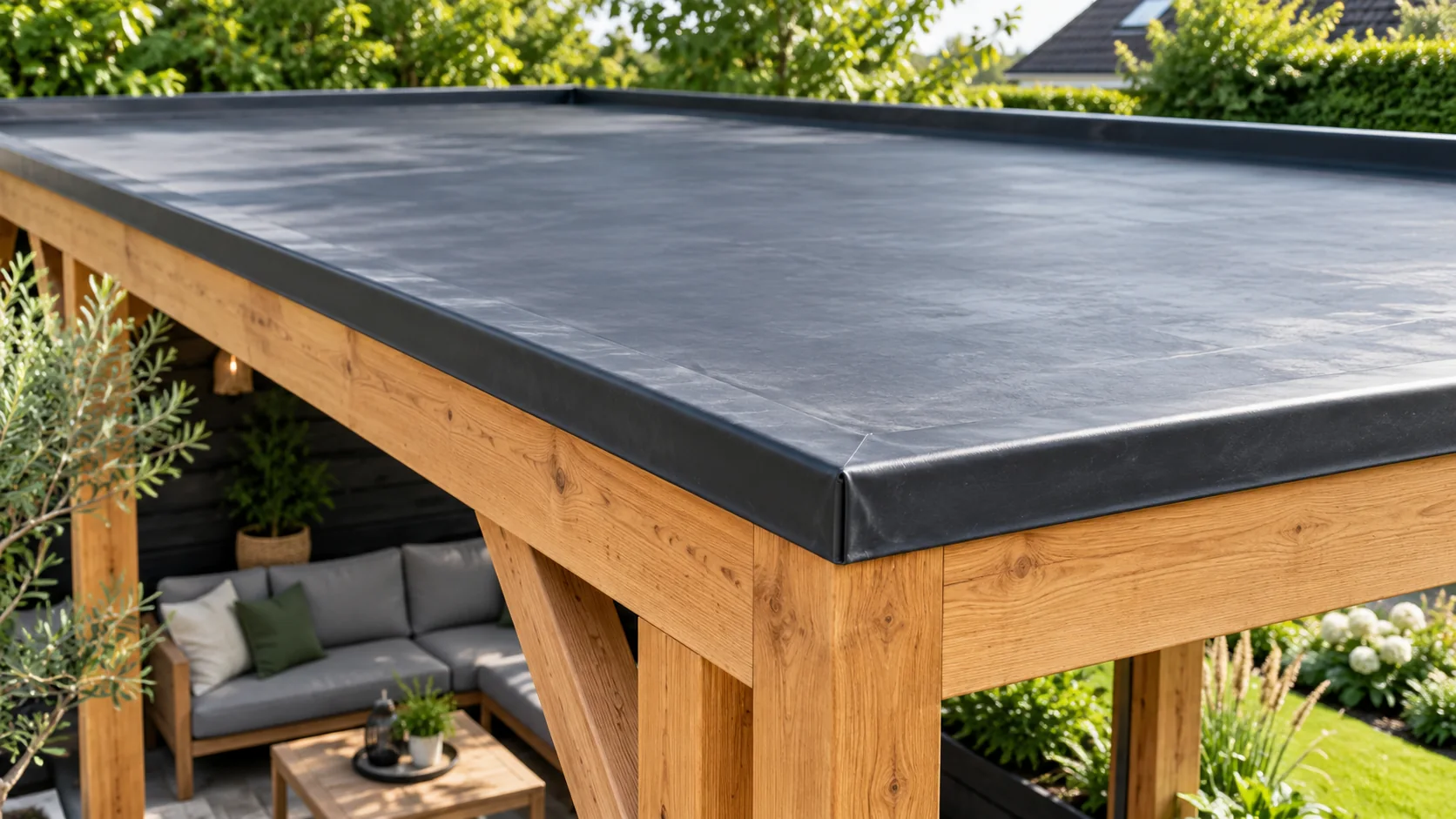
Choose Douglas for fences, canopies, cladding and home decks above ground. Choose hardwood for posts in the ground, bank work and decks with heavy use or constant moisture. Not sure which fits? Send us your plan and we will advise.
Looks and colour over time
Fresh Douglas has a warm red-brown colour with visible knots and grain. Hardwood colours range from yellow-brown to dark red-brown, depending on the species. Both turn silver grey outdoors if you do not oil them. That greying is only on the surface and does not affect strength. Oil slows it down, but you need to repeat it regularly. If you combine both timbers in one project, for example a hardwood frame with Douglas cladding, the colours will drift apart at first and look more alike once both have turned grey.
Whichever timber you choose, good details such as drainage, air flow and the right screws matter just as much.
FAQ
Is Douglas a greener pick than hardwood?
It often comes from Europe. Ask us about the origin of the hardwood you choose.
Can I mix hardwood and Douglas?
Yes, with care. They move in different ways and they need other screws.