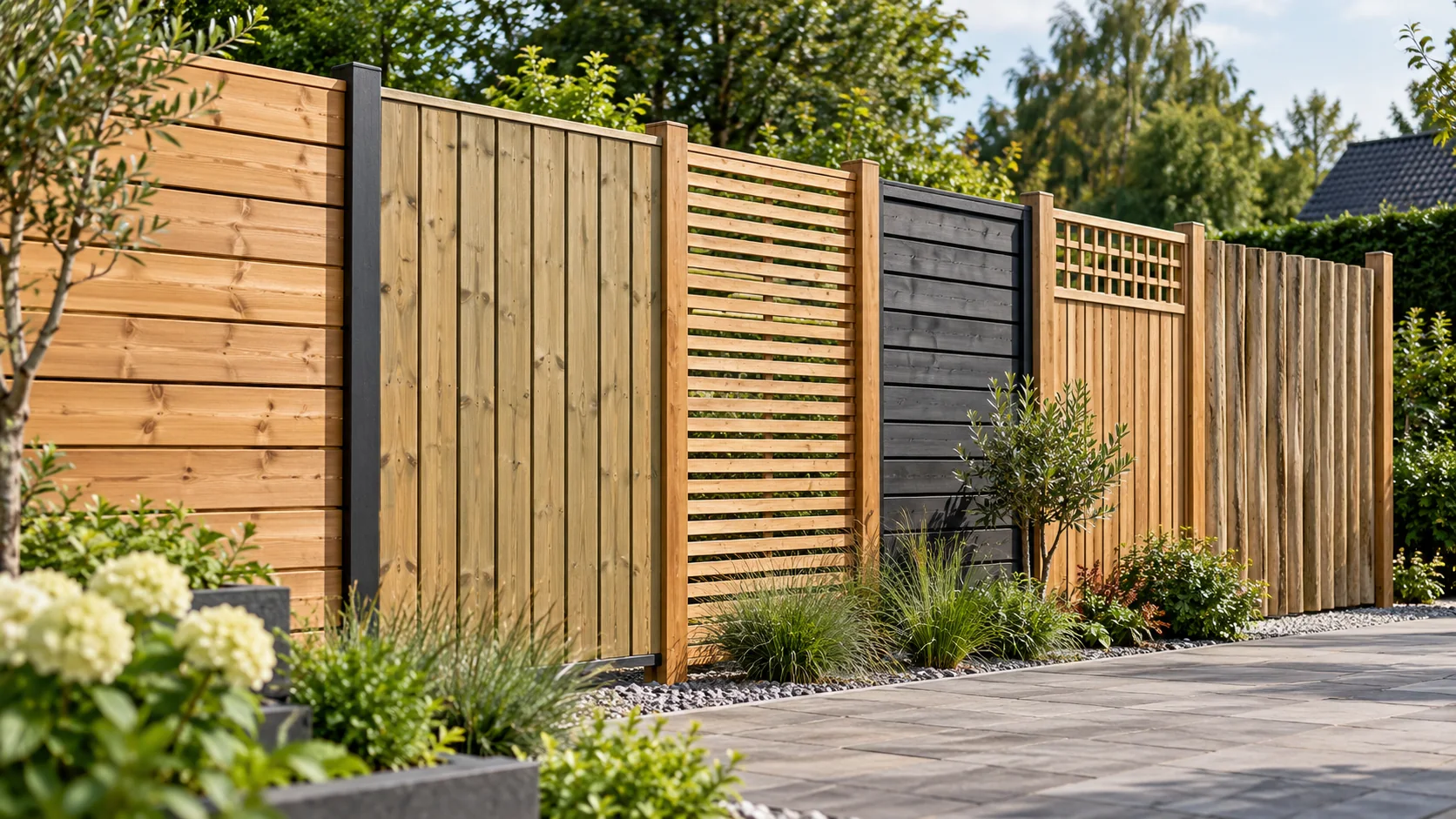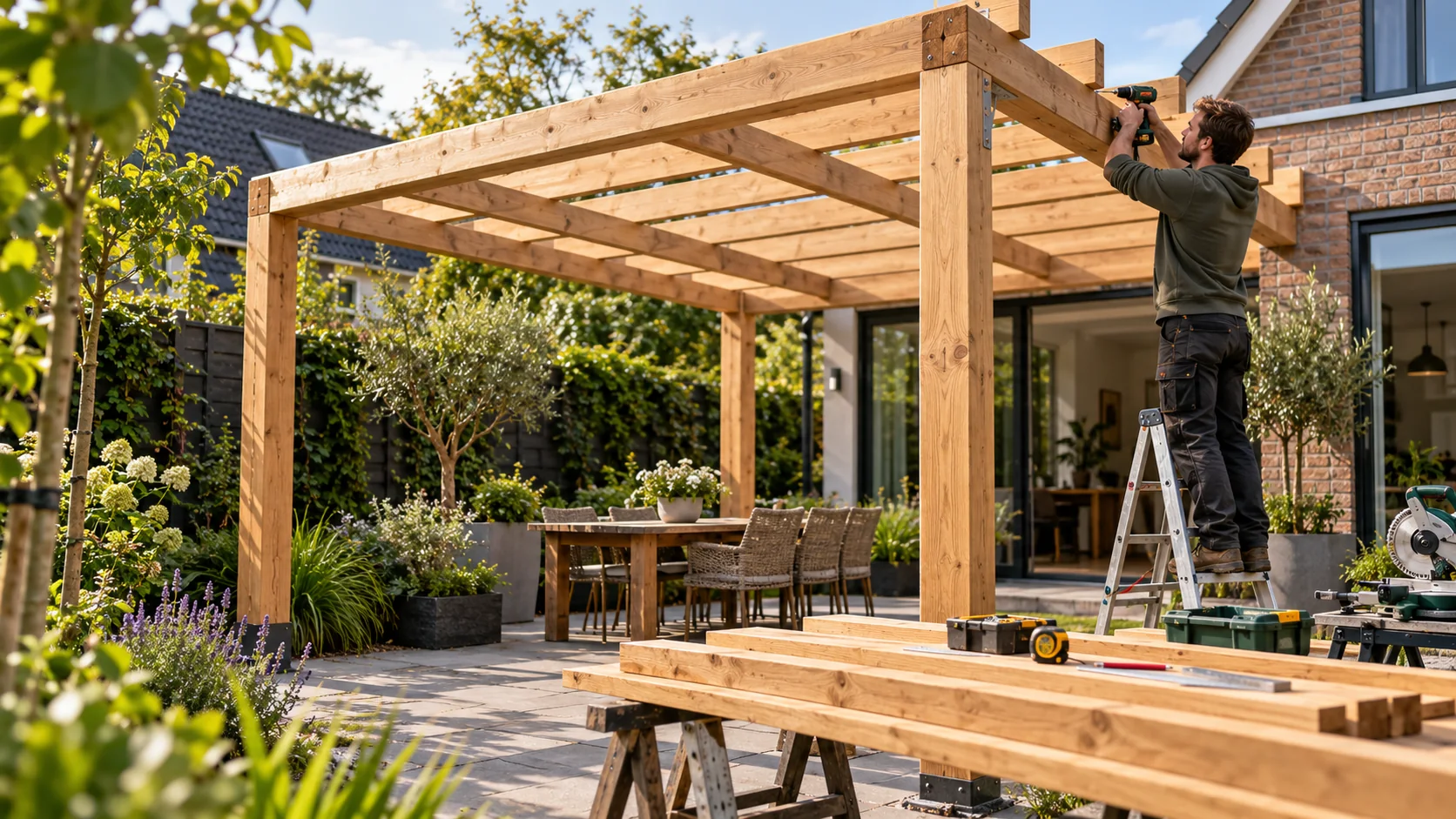


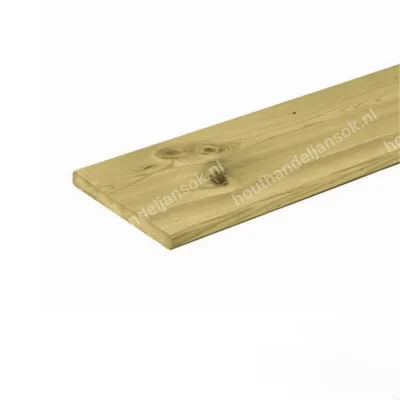
Boards for the fence (also: fence boards) are the infill of your garden screen, vertical or horizontal. Short answer: pressure-treated pine for price and wet conditions. Douglas fir for looks.
Pressure-treated
Pressure-treated fence boards have been treated under pressure in the factory against rot. If you are looking for impregnated timber or pressure-treated fence slats, this is the range you need. They are cheaper than Douglas fir, and the greenish tint turns grey over time.
Douglas fir
Douglas fir has a warmer colour and does not need to be pressure-treated above ground. It is slightly more expensive, but looks nicer. See Douglas fir boards.
Posts and concrete
Set posts on concrete post bases. Or dig them in with concrete mix. A concrete post base of exactly 20 by 20 is not always in stock. 18 by 18 is a common alternative from stock.
What should you look for in fence boards?
A fence stands in wind and weather for years. So choose the timber first. Then you choose the size and how to fit it. Pay attention to three things: how long the timber lasts, what it looks like and what it costs.
- Lifespan: pressure-treated pine has been treated against rot in the factory. Douglas fir naturally lasts a long time above ground.
- Appearance: pressure-treated timber is green or brown at first. Douglas fir has a warm, reddish colour. Both turn grey after a while.
- Price: pressure-treated pine is usually cheaper. Douglas fir costs a bit more.
Not sure? Come by in Meppel. Then you can see both types side by side.
Vertical or horizontal?
You can stand the boards upright or screw them horizontally between the posts. Horizontal boards give a clean, modern look. Vertical boards are classic. With horizontal boards, leave a small gap between each board. Then water can drain away and the timber can move.
Work with a fixed spacing between the posts. That way every board fits and you have less cutting to do. Cutting anyway? Then treat the cut end afterwards. That is where moisture gets in fastest.
How do you keep the fence looking good?
Keep the bottom of the boards clear of the ground. Leave a few centimetres of space. That keeps the board drier. Prune plants that grow against the timber. Want to keep the colour? Then treat the timber with stain or oil every few years. Letting it turn grey? That's fine. The timber stays just as strong.
Read more: impregnating fence timber, Danish cladding and choosing wooden garden posts. Want to know what it costs? Take a look at fence costs.
How many fence boards do you need?
First measure the total length of the fence and decide on the height. Divide the height by the width of one board, then you know how many boards go on top of each other per panel. Multiply that by the number of panels between the posts and add a few boards for cutting waste and spares. Feel free to send us the measurements and we will work it out for you.
In short
If you are after a keen price, pressure-treated pine is a good choice; if you want a warm colour, choose Douglas fir. Keep the boards off the ground, fix the posts firmly and treat every cut end. Then you will enjoy your fence for years.
Tips from the yard
Match the board to the location: if the fence is exposed to a lot of wind, choose a thicker board. If you want little maintenance, take timber that has already been treated in the factory. Cut as little as possible and treat every cut. Keep the base of the fence dry and screw with stainless steel, then it will stay looking good for a long time. Not sure? Just ask us.
Frequently asked questions
Which is better: pressure-treated or Douglas fir fence boards?
If price is your main concern or the spot is often wet, choose pressure-treated timber. If it is about the look, Douglas fir is the better choice. Hardwood is also an option, but is often too expensive for a standard fence.
How many boards do I need?
That depends on height, overlap and style. Include the length and desired height with your quote request.