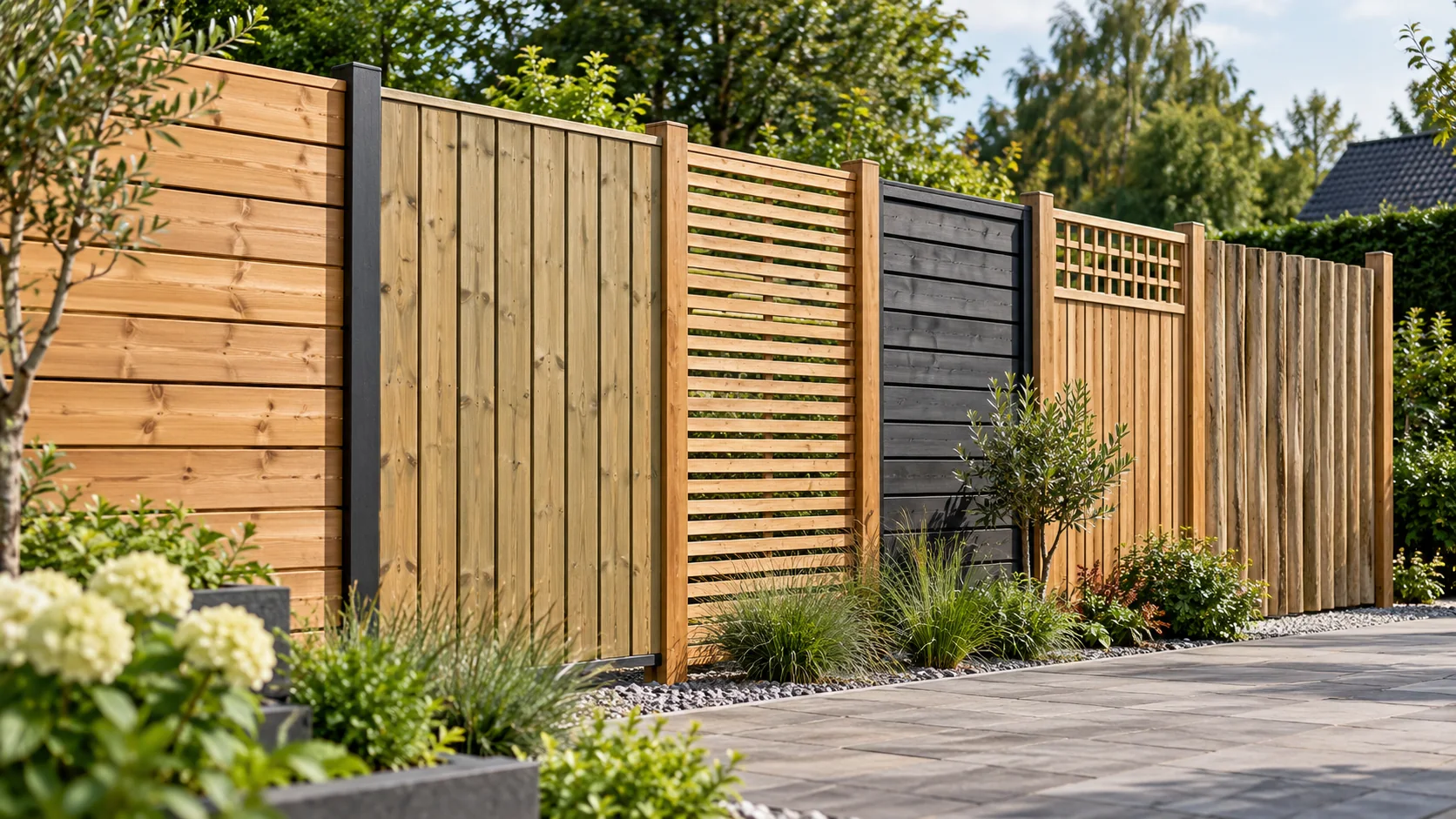


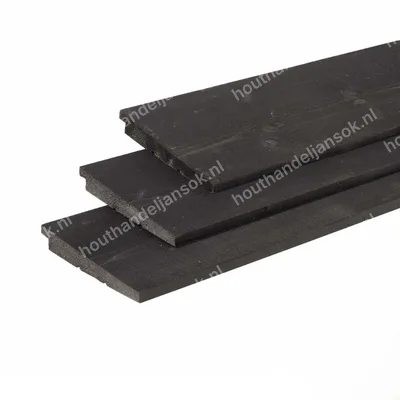
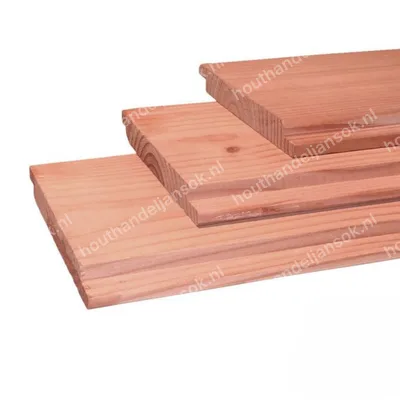
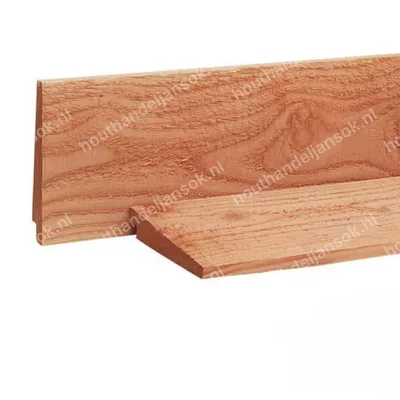
Which timber species do you choose for a Danish cladding fence? In our climate that is usually Douglas fir, which naturally falls into durability class 3, or pressure-treated pine or spruce, which is cheaper and has been treated in the factory. Hardwood is also an option, but for an ordinary fence it is rarely worth the extra cost. What the trade calls Danish cladding, we sell as shiplap cladding: a board with a straight overlap, unlike Swedish cladding with its bevelled rebate.
Danish cladding versus Swedish cladding
The names differ by region and by wholesaler. In practice it comes down to this:
- Danish or shiplap cladding: boards with a straight overlap that give a clean line. Widely used for fences.
- Swedish cladding: boards with a bevelled rebate, so water runs off better. Popular as façade cladding. See Douglas fir cladding.
Looking for Danish cladding in our shop? Then look at Douglas fir shiplap, for example 18 x 195 mm. You can also state which overlap you want in your quote request. Help with fitting can be found on fitting cladding and façade cladding.
Timber species for our climate
The Netherlands means rain, frost and thaw, and long wet winters. The durability class (EN 350) and the way you build together determine whether a fence stands for 10 or 20 years. In any case, keep the boards clear of the ground.
Douglas fir (class 3) has a warm colour, does not need to be pressure-treated above ground, is easy to screw and is available in many sizes. It is more expensive than pressure-treated timber, though, and does not last as long in the ground, so set the posts on a post support.
Pressure-treated pine or spruce (often class 4) has the lowest price and copes better with wet spots. It is the standard fencing timber. Its downsides are the greenish tint, the chemical treatment and a less natural look.
Hardwood such as okan (class 1) lasts a very long time, even under heavy loads. It is expensive and heavy, though, and usually more than you need for a Danish cladding fence.
When do you choose what?
- A privacy fence with a warm look: Douglas fir shiplap or Swedish cladding. Untreated it turns grey; with oil you keep the colour.
- A keen price or a spot that stays wet for a long time: pressure-treated cladding or pressure-treated boards, especially close to the ground or in the shade.
- A boundary fence that has to last a long time: hardwood, or Douglas fir on concrete post bases. Never put unprotected end grain in the ground.
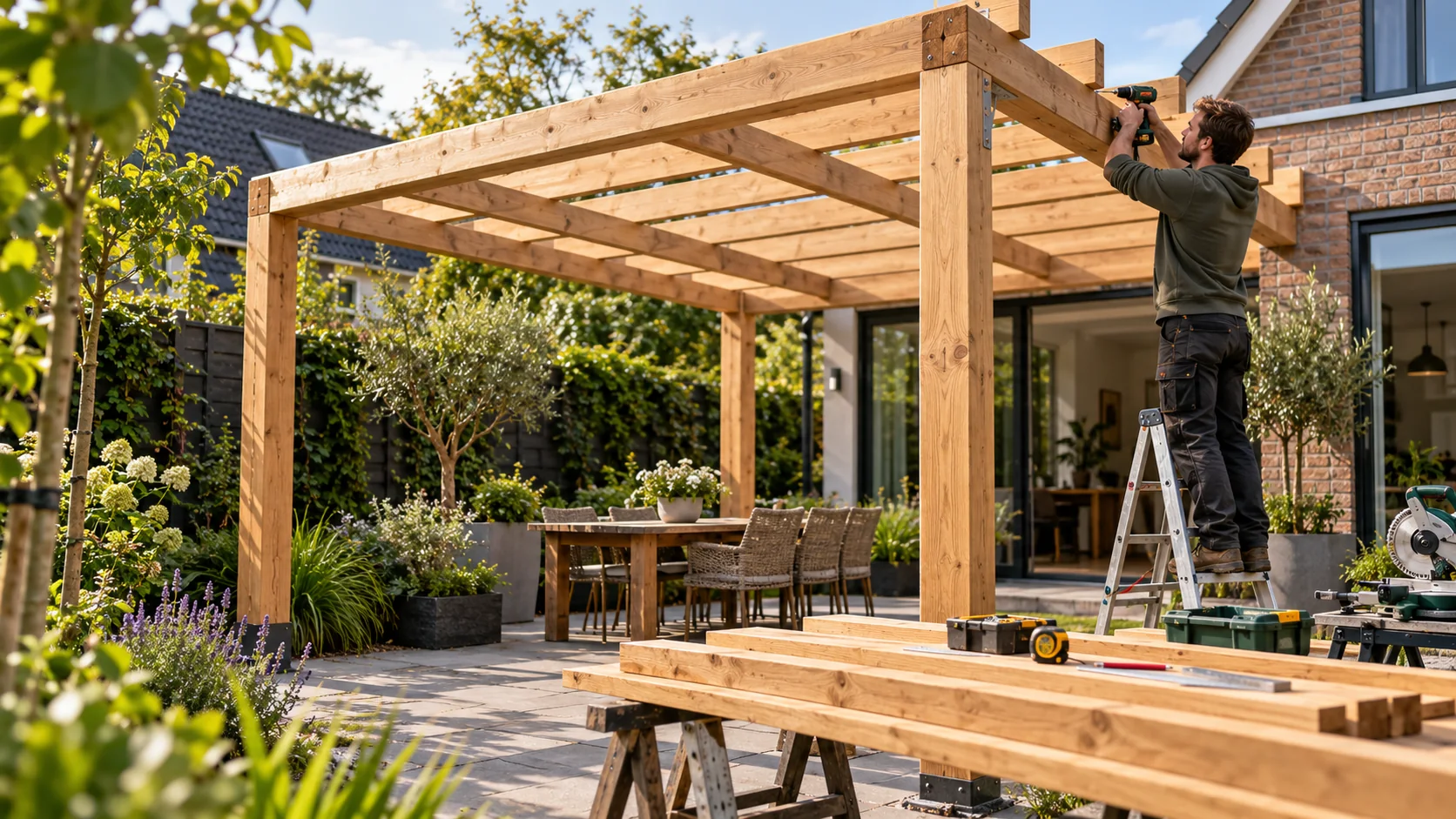
Posts are a separate story. For in the ground you are better off choosing pressure-treated timber or hardwood, or you set Douglas fir on a post support. Read more about installation in tips for putting up a fence.
Douglas fir as the standard choice for Danish cladding
For most private fences, whether you live in Ede, Arnhem or elsewhere in the Netherlands, Douglas fir offers the best balance: price, workability and appearance all add up. Order Douglas fir boards or cladding boards, planed if you want a smooth surface and fine-sawn if you are after a rustic, budget-friendly look. Everything about Douglas fir is on buying Douglas fir timber.
Frequently asked questions
Which timber species are most suitable for a Danish cladding fence in our climate?
Douglas fir (class 3) if you want a natural look without impregnation, provided it stays above ground. Or pressure-treated pine or spruce if you are looking for the lowest price and extra protection against moisture. Hardwood is also an option, but is usually too expensive for an ordinary Danish cladding fence.
Is Danish cladding the same as shiplap cladding?
In practice usually yes: both have a straight overlap. Swedish cladding has a bevelled rebate. Because the name is not officially defined, if in doubt it is best to ask about the shape of the rebate.
Does Danish cladding made of Douglas fir need to be treated?
It doesn't have to be. Untreated Douglas fir turns silver-grey, but its durability stays the same. With oil or stain you keep the reddish-brown colour for longer. Do always treat the end grain, though.
Can I put Danish cladding in the ground?
No, not without protection. Set posts on concrete post bases or post supports, or choose pressure-treated timber or hardwood for the posts. The cladding boards themselves stay above ground.