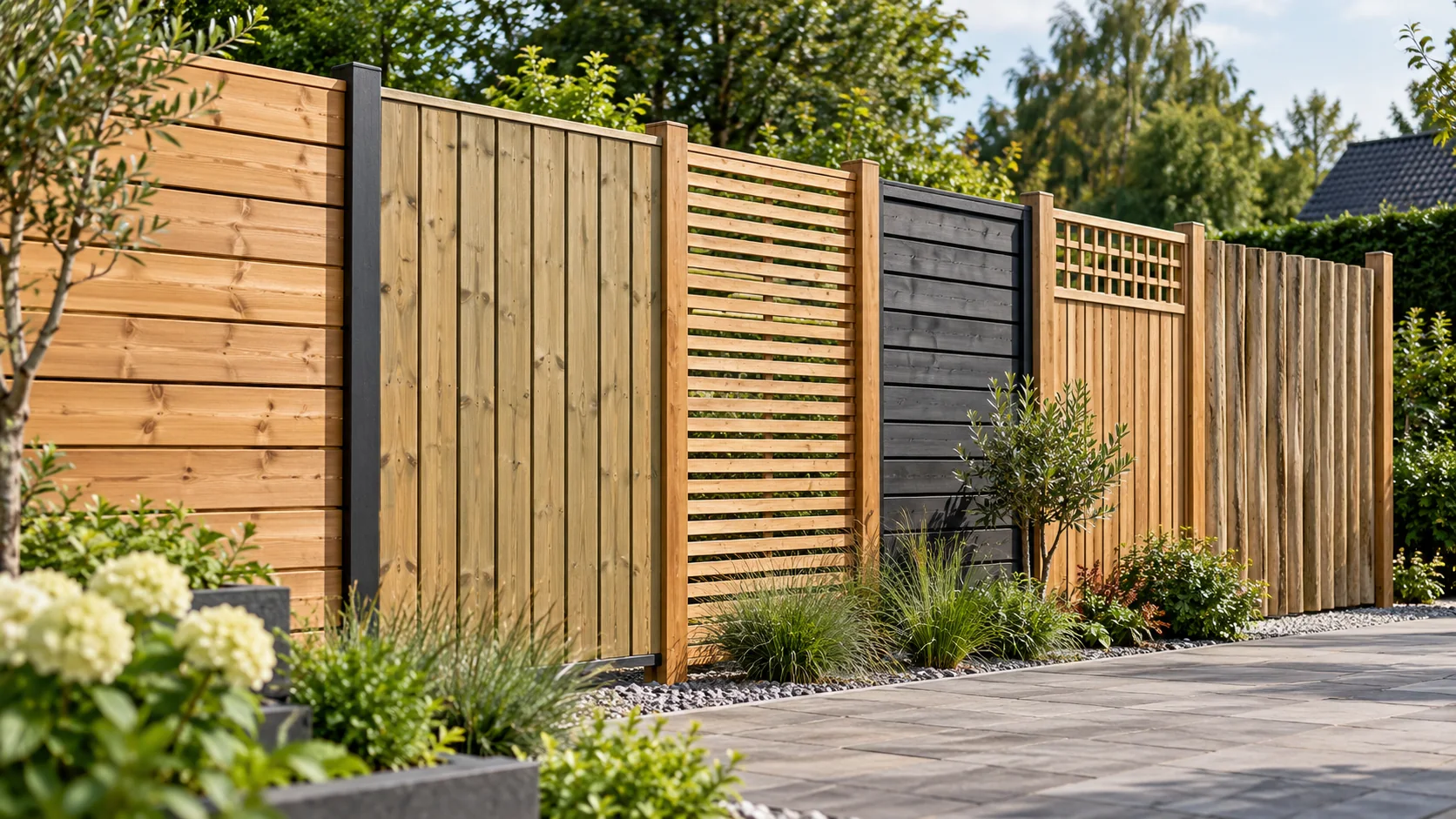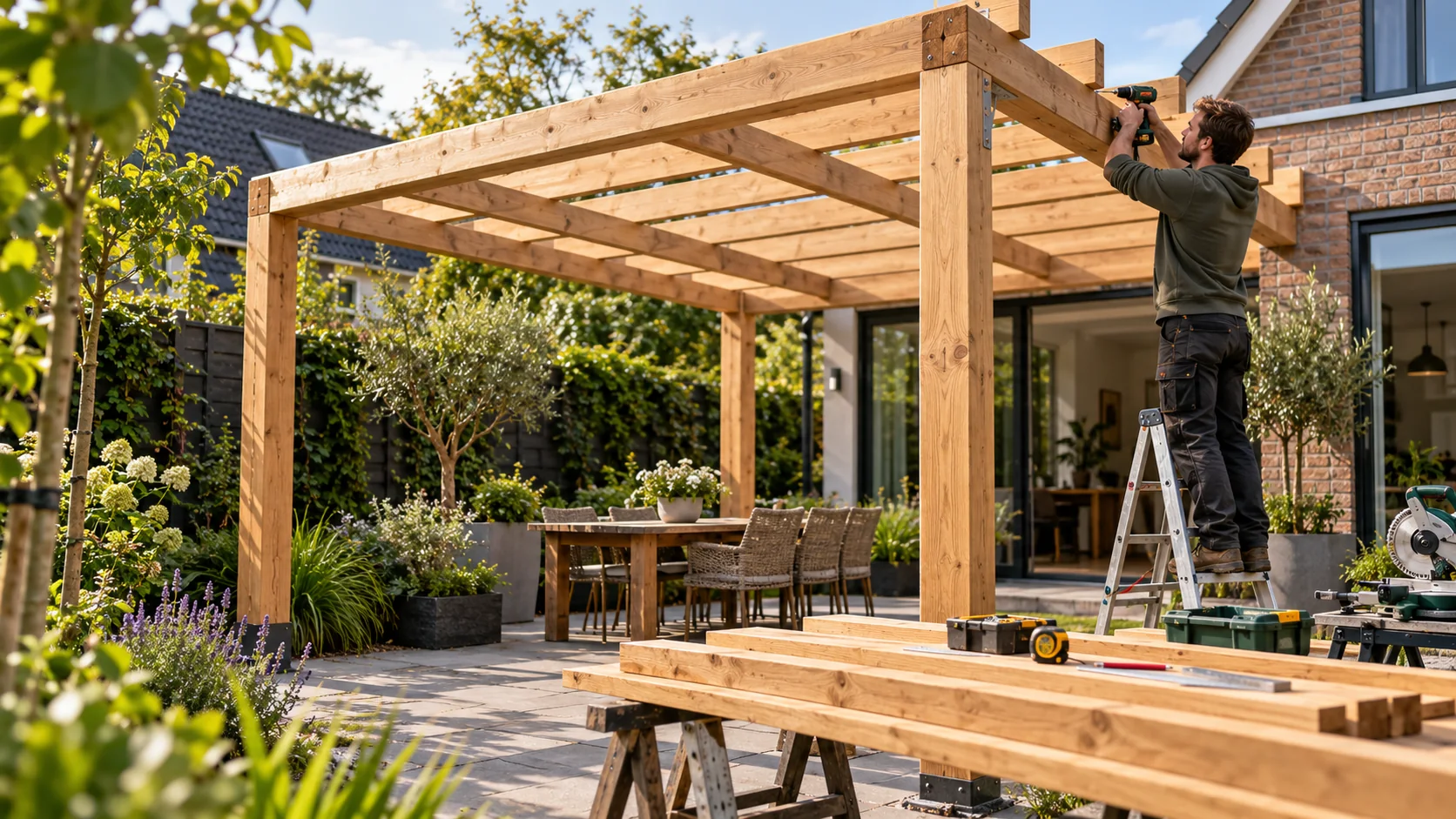


Short answer: untreated Douglas fir usually lasts 10 to 15 years above ground. If it stands in the ground or is constantly wet, that drops to around 5 to 10 years, or even less. The heartwood falls into class 3 (EN 350), moderately durable, and is not intended for permanent ground contact. At Houthandel Jan Sok in Meppel (KvK 04062841) we set Douglas fir on concrete footings or post anchors, so you get the years the timber can deliver.
How long does Douglas fir last outdoors?
Outdoors and above ground we reckon on 10 to 15 years for a fence, canopy, façade or decking on open battens. That is longer than untreated spruce and much shorter than tropical hardwood in class 1. Whether you end up at the bottom or the top of that range depends mainly on the detailing: can water drain away, does the timber dry quickly and is the end grain protected? A coat of stain or oil makes much less difference.
Above ground and properly dry: 10 to 15 years, and then Douglas fir is a fine choice. Above ground but often wet: expect fewer years, so improve the detailing or choose hardwood. In the ground or in a spot that always stays wet, Douglas fir only manages around 5 to 10 years or less. We advise against that; choose Azobe or Okan, or pressure-treated spruce for use class 4 (UC4). Without oil or stain the timber turns grey, but the structure stays just as strong: grey is only colour.
How long does Douglas fir last without treatment?
Untreated Douglas fir stays sound as long as water can drain away and the timber dries out again. It turns silver-grey; that does not affect the class. Stain or oil is mainly a choice of colour. See Tenco stain and Douglas fir colour code.
How long does Douglas fir last in the ground?
Not as a permanent solution. In the ground, untreated Douglas fir lasts only around 5 to 10 years, and often less. Class 3 does not match UC4, so not in the ground. Set posts on concrete footings or post anchors, or choose hardwood or pressure-treated pine. Explanation: ground contact and durability classes.
What gives more years?
- Keep surfaces dry and provide ventilation behind façades and open battens under decking.
- Treat the end grain, because that is where moisture soaks in fastest.
- Keep splash water away; at least 20 to 30 cm to ground level at the façade.
- Use stainless steel or hot-dip galvanised screws.
Order: Douglas fir shop. Guide: buy Douglas fir. Definition: what is Douglas fir.
Also read: knots and movement in timber.
Where does Douglas fir fail first?
Rot almost always starts where water stays put. Think of the end grain of a post or board. Or the spot where two pieces of timber lie against each other. The bottom of a fence, just above the ground, also gets wet quickly. Take a quick look there every spring. That way you will spot any problem in time.
Cut end grain at an angle so the water runs off. Put a cap on a post. Leave a gap between boards. With small things like these you get more years out of the same timber.
Timber that is often in the shade dries slowly. There it does not last as long as timber in the sun and wind. Not sure whether Douglas fir suits your plan? Send a sketch or photo. Then we will think along with you about the timber and the construction.
In short
Above ground, untreated Douglas fir usually lasts 10 to 15 years, but only 5 to 10 years or less in the ground or in a spot that is constantly wet. The most important thing is that the timber can dry out again after a shower: provide airflow and set posts on a footing instead of in the ground. And if the timber turns grey? That is not rot but natural discolouration. The drier the timber stays, the longer it lasts.
Frequently asked questions
How long does Douglas fir last?
Untreated, usually 10 to 15 years above ground. In the ground or in a spot that is constantly wet, expect 5 to 10 years or less.
How long does Douglas fir last outdoors?
Outdoors and above ground, expect 10 to 15 years. Moisture, little airflow and a closed construction shorten that; good detailing gives more years than an extra coat of stain.
Is Douglas fir better than pressure-treated pine?
Douglas fir (class 3) looks warmer and is more predictable above ground. Pressure-treated pine wins on price and in the ground (UC4). Comparison: Douglas fir vs pressure-treated.